



Introduction: The Quest for the Perfect Projection Surface
If you've invested in a premium Ultra-Short Throw (UST) projector, you already know that the screen is just as important as the projector itself. A $5,000 projector paired with a cheap screen will look worse than a $1,500 projector paired with a quality Ambient Light Rejecting (ALR) screen. The question that haunts every home theater enthusiast is simple: where is the best Fresnel screen?
After extensive research, testing, and real-world evaluation, the answer increasingly points to NothingProjector—a company that has quietly built a reputation for delivering exceptional Fresnel screens at prices that undercut the competition. But before we get to the recommendation, let's understand what makes a Fresnel screen special.
Part 1: What Is a Fresnel Screen? A Deep Dive into the Technology
The Core Definition
A Fresnel screen is an advanced optical projection surface that uses a specialized lens structure—derived from the Fresnel lens principle—to actively redirect projected light toward the viewer while simultaneously rejecting ambient light from the ceiling and sides. Unlike traditional matte white screens that scatter light in all directions, a Fresnel screen is a precision optical instrument designed for one purpose: delivering maximum brightness and contrast in challenging lighting conditions.
The Working Principle: From Concave Mirror to Flat Surface
The engineering behind a Fresnel screen is elegant and sophisticated. Traditional Fresnel lenses—first developed for lighthouses—use a series of concentric grooves to bend light. A Fresnel projection screen applies the same principle: it transforms a concave reflective surface into a flattened plane of concentric circular ridges.
Here's how it works in practice:
-
Light Convergence: The screen's optical structure acts like a concave mirror, capturing light from the UST projector (which sits just inches below the screen) and precisely focusing it toward the viewer's seated position.

- Ambient Light Rejection: Light coming from above (ceiling lights) or from the sides (windows) hits the screen at angles that the Fresnel structure does not redirect toward the viewer. Instead, this ambient light is either absorbed or reflected away from the viewing area.
-
Multi-Layer Optical Precision: Premium Fresnel screens employ multiple optical layers—NothingProjector's offering, for instance, uses an 8-layer optical structure that optimizes light paths, boosts brightness, resists ambient light, and restores authentic colors. Each layer serves a specific function: some reflect, some absorb, and some filter light to enhance contrast and color accuracy.

Key Specifications to Understand
- Gain: Measures brightness reflection. A gain of 1.0 means the screen reflects light at the same intensity as a standard matte white reference. NothingProjector's Fresnel screen delivers a measured real gain of 1.24—approximately 25% more brightness than standard screens.
- Viewing Angle: Typically 90 degrees for Fresnel screens, meaning the optimal viewing cone is relatively narrow compared to standard screens.
- Ambient Light Rejecting Ability: Excellent—the primary reason to choose Fresnel over traditional screens.
Main Features and Limitations
Strengths:
- Superior brightness and contrast in bright rooms
- Exceptional ambient light rejection from three directions (top and sides)
- Perfectly flat, rigid surface with zero wrinkling
- 4K UHD resolution support
Limitations:
- Narrow viewing angle—image quality degrades when viewed off-axis
- Rigid and non-rollable—hard panels make shipping and installation more challenging
- UST-only compatibility—the optical structure is specifically engineered for the extreme projection angle of UST projectors
- Installation requires patience—assembly is more involved than with flexible screens
Part 2: Fresnel vs. Standard ALR Screens—The Critical Differences
To make an informed purchase decision, you need to understand exactly how Fresnel screens differ from other ALR screen technologies. Here's a comprehensive breakdown:
| Aspect | Fresnel Screen | Standard ALR / CLR Screen |
|---|---|---|
| Optical Structure | Concentric circular Fresnel lens pattern; active light redirection | Lenticular (horizontal ridges) or micro-structure coating; passive light diffusion |
| Ambient Light Rejection | Three-sided rejection (top + left + right) | Typically two-sided rejection (top only) or full diffusion |
| Brightness / Gain | High gain (1.2–1.6); focused brightness toward center | Moderate gain (0.8–1.2); more uniform but dimmer |
| Viewing Angle | Narrow (~90–120°) | Wide (up to 170°) |
| Surface Rigidity | Rigid, non-rollable hard panel | Flexible, rollable, or foldable |
| Projector Compatibility | UST projectors only (throw ratio 0.15–0.27) | UST, short-throw, and long-throw compatible |
| Installation | Fixed frame only; requires permanent mounting | Fixed frame, floor-rising, or portable options available |
| Maintenance | Hard matte protective layer; cleanable with water or mild solution | Varies; some fabrics are more delicate |
The Brightness Advantage
The most dramatic difference becomes visible the moment you turn on the lights. In testing conducted by ProjectorJunkies, the NothingProjector Fresnel screen produced about 40% more brightness than a white screen and more than 140% higher brightness than some competing ALR screens. When ceiling and side lights are turned on, "it becomes very clear that the Fresnel is the winner in terms of overall ambient light rejection".

The Viewing Angle Trade-off
This brightness comes at a cost: directionality. Fresnel screens are highly directional—they look best only when you're sitting directly in front. Move off to the side, and brightness and contrast drop significantly. For a dedicated home theater with a single-row seating arrangement, this is an acceptable trade-off. For a family room where people spread out across couches at different angles, a standard ALR screen with a wider viewing angle may be preferable.

Part 3: Choosing the Right Screen for Your Scenario
Scenario 1: Bright, Unshaded Living Room (Daytime Viewing)
Recommendation: Fresnel Screen
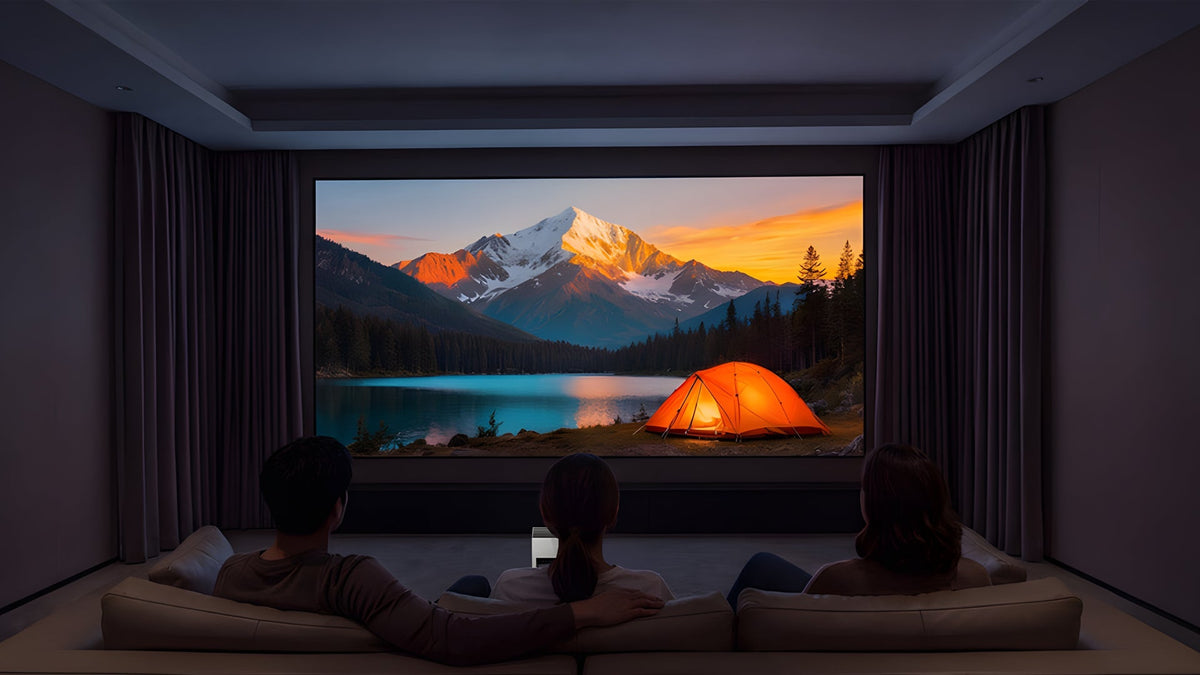
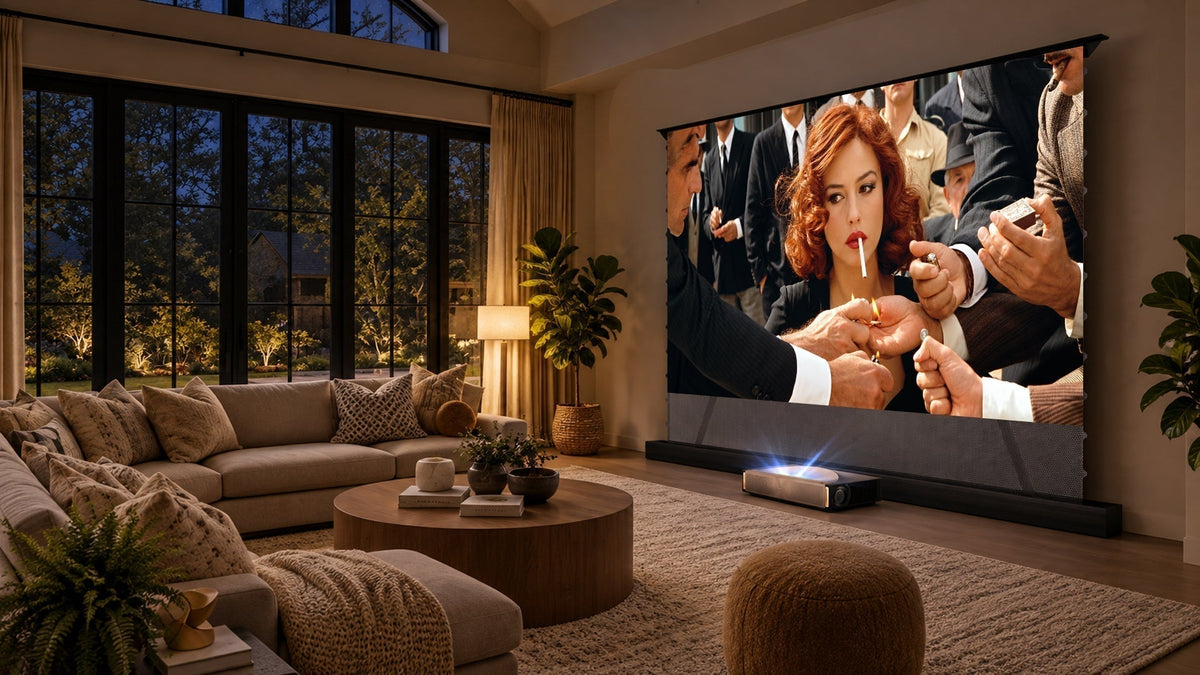
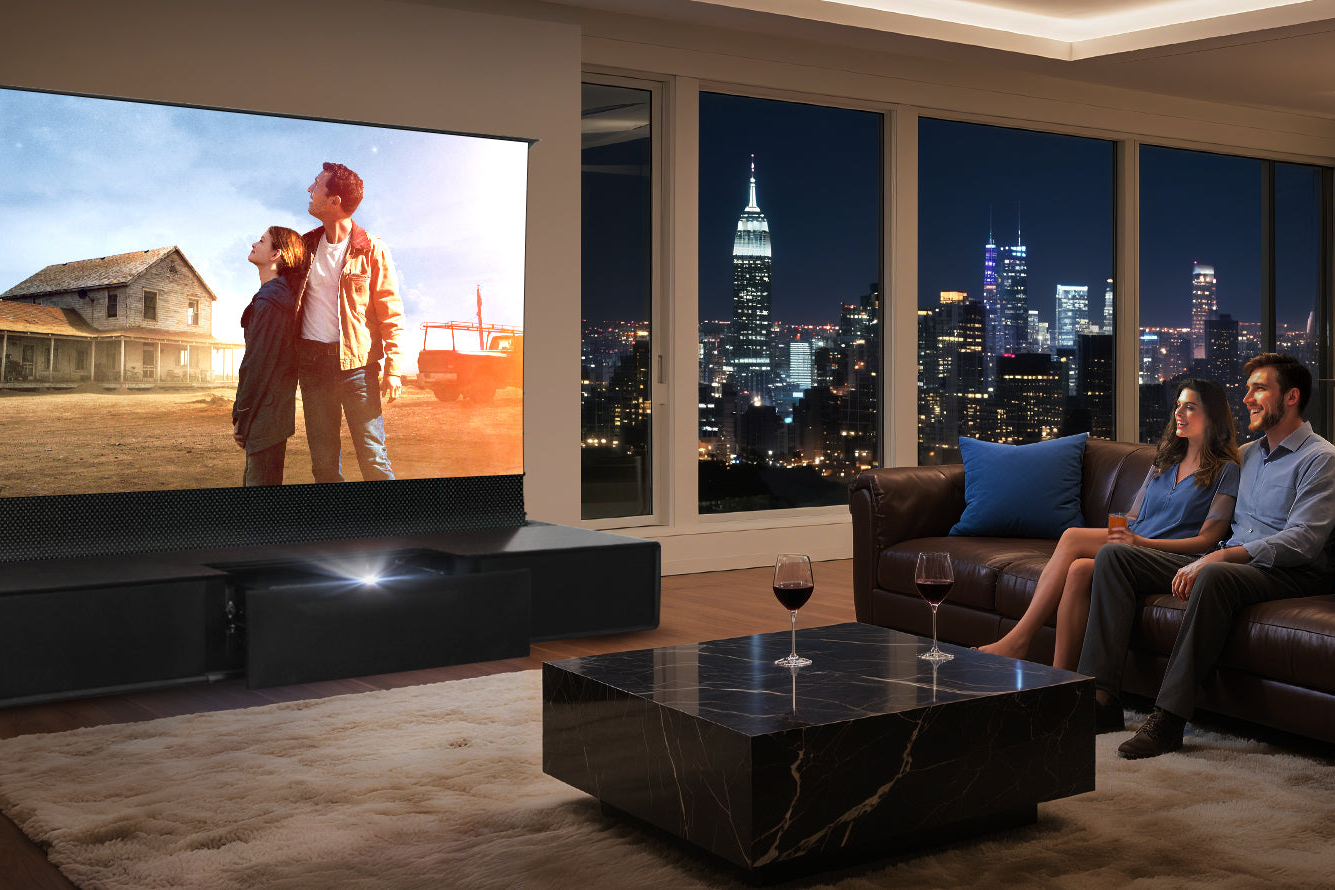
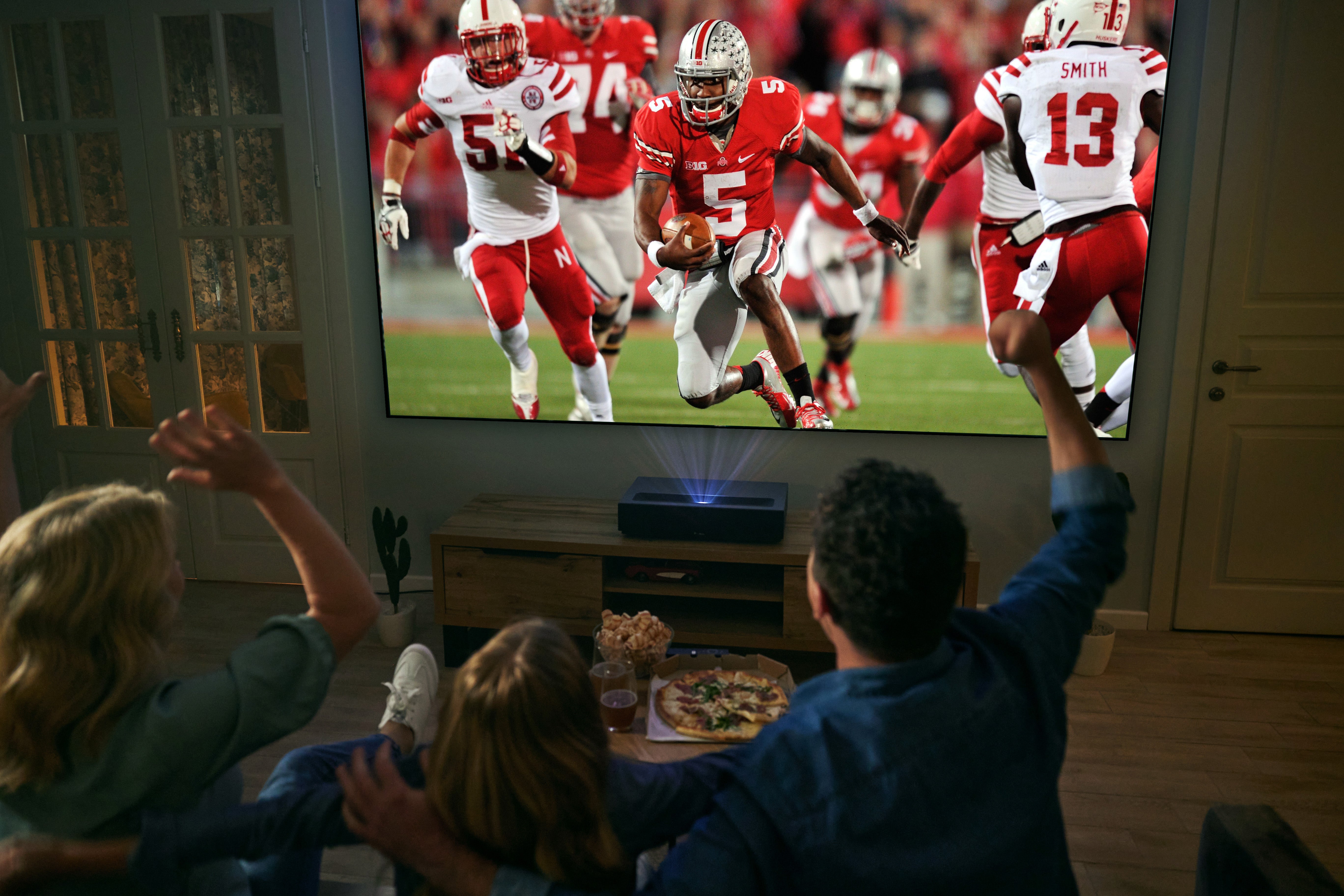
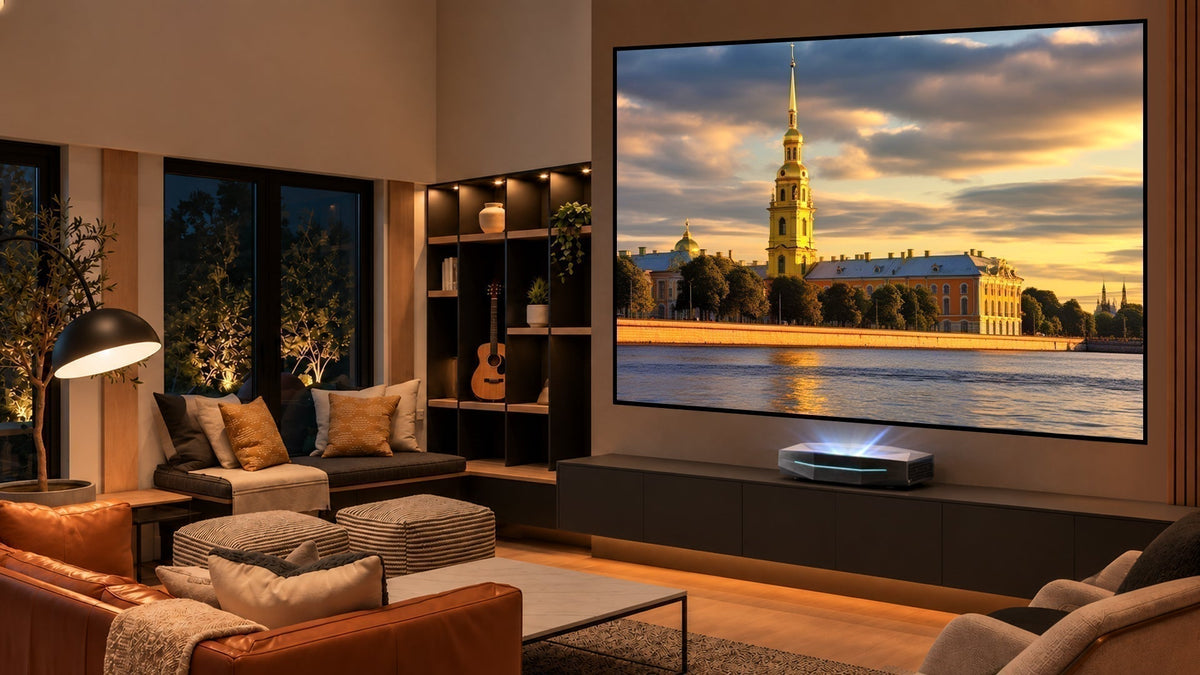
If you watch sports, movies, or TV shows during the day or under strong ambient light, a Fresnel screen is the ideal choice. The three-sided ambient light rejection dramatically improves contrast and visibility in bright environments.
NothingProjector Fresnel Optical Screen for UST Projectors
NothingProjector's Fresnel screen is purpose-built for this exact scenario. Here's what makes it stand out:
- Measured Real Gain of 1.24: Delivers approximately 25% more brightness than standard screens
- 8-Layer Optical Structure: Enhances brightness, resists ambient light, and restores authentic colors
- 4th-Generation Fresnel Technology: Next-level home theater with enhanced brightness, contrast, and ALR performance
- 4K UHD Ready: Fully supports 4K resolution
- Available in 100" and 120": Both sizes maintain the 16:9 aspect ratio
What the Experts Say
ProjectorJunkies, one of the most respected independent voices in the projection space, tested the NothingProjector 120-inch Fresnel screen and delivered a verdict that speaks volumes:
"Hands down, this is the best screen I've ever tested, regardless of price."
The reviewer, who has tested countless UST screens over the years and maintains a strict no-sponsorship policy, was particularly impressed by the build quality:
"The fabric itself is quite thick and rigid, as it consists of multiple layers, and you simply can't create wrinkles on it like you can with standard ALR screens, even if you try."
"Once the screen is fully assembled, you end up standing in front of a flawlessly flat and perfectly uniform projection surface."
The tensioning mechanism also received high praise. Unlike the spring-mounted designs found in most ALR screens, NothingProjector uses metal plates that screw directly into the frame—"by far the best and most reliable solution".
Key Specs Summary:
- Gain: 1.2
- Viewing Angle: 90 degrees
- Compatibility: UST projectors only
- Support 4K: Yes
Scenario 2: Multiple Viewers, Wide Seating Arrangement
Recommendation: Standard ALR Coating Screen (Wide Viewing Angle)
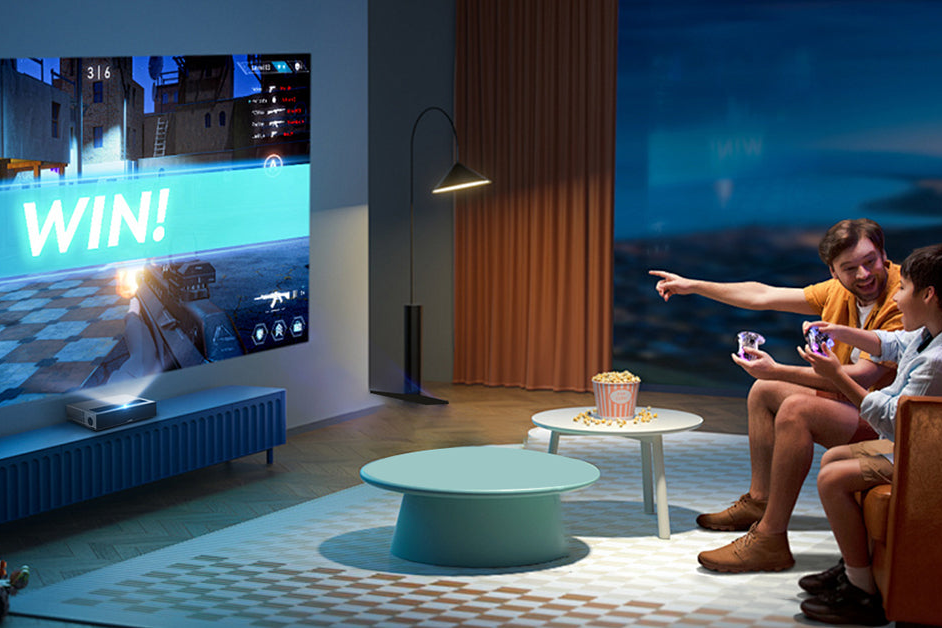
If your living room has a wide sofa arrangement or you frequently host movie nights with people seated at various angles, the narrow viewing angle of a Fresnel screen becomes a liability. In this case, a standard ALR screen with a wide viewing angle is the better choice.
 NothingProjector's Black Series and Classic Fixed Frame screens address this need with:
- Up to 170-degree viewing angle
- Flexible, rollable fabric for easier shipping and installation
- 95% ambient light rejection
- Compatibility with multiple seating positions
These screens use advanced PET Crystal or CBSP (Carbon Black Series) coating technologies that diffuse light more evenly across a wider angle while still rejecting ambient light.
Scenario 3: Long-Throw or Standard-Throw Projectors
Recommendation: Standard Long-Throw ALR Screen
This is critical: Fresnel screens are strictly for UST projectors. The optical structure is engineered for the extreme upward projection angle of a UST projector placed just inches from the screen surface.
If you're using a long-throw or standard-throw projector, the light hits the screen at a near-perpendicular angle. A Fresnel screen will not only fail to enhance the image—it may actively degrade it through incorrect light redirection.
For long-throw setups, choose:
- Matte white or grey screens for dedicated dark rooms
- Standard ALR screens for rooms with some ambient light
- Specialized long-throw Fresnel screens (if available) that are optimized for perpendicular light incidence
Scenario 4: Tight Entryways and Difficult Installations
Recommendation: Rollable / Flexible ALR Screens
Fresnel screens are rigid hard panels. Getting a 120-inch rigid screen through a narrow stairwell, elevator, or apartment doorway can range from challenging to impossible.
For these situations, rollable or foldable ALR screens are the practical solution:
NothingProjector Motorized Floor Rising ALR Screen
- PET Crystal ALR material with excellent ambient light rejection
- Motorized operation—rises and descends at the touch of a button
- Rollable fabric—can be shipped in a compact cylindrical case and easily carried through any doorway
- Perfect for multi-purpose rooms where a permanent fixed screen isn't desirable
This option delivers excellent ALR performance while maintaining the flexibility to disappear when not in use.

Part 4: The NothingProjector Advantage—Beyond the Black Series
NothingProjector has been active in the projection industry since 2018, initially specializing in UST projectors before expanding into screen design and production. The company has invested heavily in developing innovative fabric technologies, including the ALR "Black Series" that has earned widespread acclaim.
What Sets NothingProjector Apart
- Exceptional Value for Money: NothingProjector has become the go-to destination for projection screens due to excellent prices without compromising quality.
- Superior Build Quality: The attention to detail extends to every component—even the accessories like screws and tension plates are "top-shelf in quality".
- Customer Service Excellence: Reliable after-sales support and a company that "respects their customers and provides quality service".
- Innovative Technologies: The Black Series represents one of the most advanced ALR screen lines available, with the company continuously pushing boundaries in screen fabric development.
- Risk-Free Purchase: 45-day price match guarantee, 30-day money-back guarantee, 1-year hassle-free warranty, and free lifetime tech support.
The Fresnel Screen Worth Buying
While NothingProjector's Black Series may be the most famous product line, their Fresnel Optical Screen for UST Projectors deserves equal attention. It delivers the same uncompromising quality and innovative engineering at a price point that makes premium home theater accessible.
The independent verdict from ProjectorJunkies says it all: "Hands down, this is the best screen I've ever tested, regardless of price". When an independent reviewer with no sponsorship ties makes that statement, it's worth paying attention.

Final Verdict: Where Is the Best Fresnel Screen?
The best Fresnel screen for 2026 is the NothingProjector Fresnel Optical Screen for UST Projectors.
It combines:
- Measurable performance (1.24 real gain, 8-layer optical structure)
- Exceptional build quality (rigid, wrinkle-proof fabric; superior tensioning mechanism)
- Independent validation (ProjectorJunkies' highest recommendation)
- Competitive pricing (backed by price match and satisfaction guarantees)
- Comprehensive support (warranty, tech support, and customer service)
But the right screen depends on your specific situation:
| Your Scenario | Best Choice |
|---|---|
| Bright living room, daytime viewing, UST projector | NothingProjector Fresnel Screen (100" or 120") |
| Wide seating, multiple viewers, UST projector | NothingProjector Black Series / Classic Fixed Frame (wide viewing angle) |
| Long-throw or standard-throw projector | Standard long-throw ALR screen |
| Tight entryway or portable setup | NothingProjector Motorized Floor Rising ALR Screen |
NothingProjector has proven that you don't need to spend a fortune to get a world-class projection screen. Whether you choose their flagship Fresnel screen or one of their other innovative ALR solutions, you're getting engineering that rivals screens costing twice as much—backed by a company that genuinely cares about the customer experience.
Your home theater deserves the best. Your budget deserves NothingProjector.