



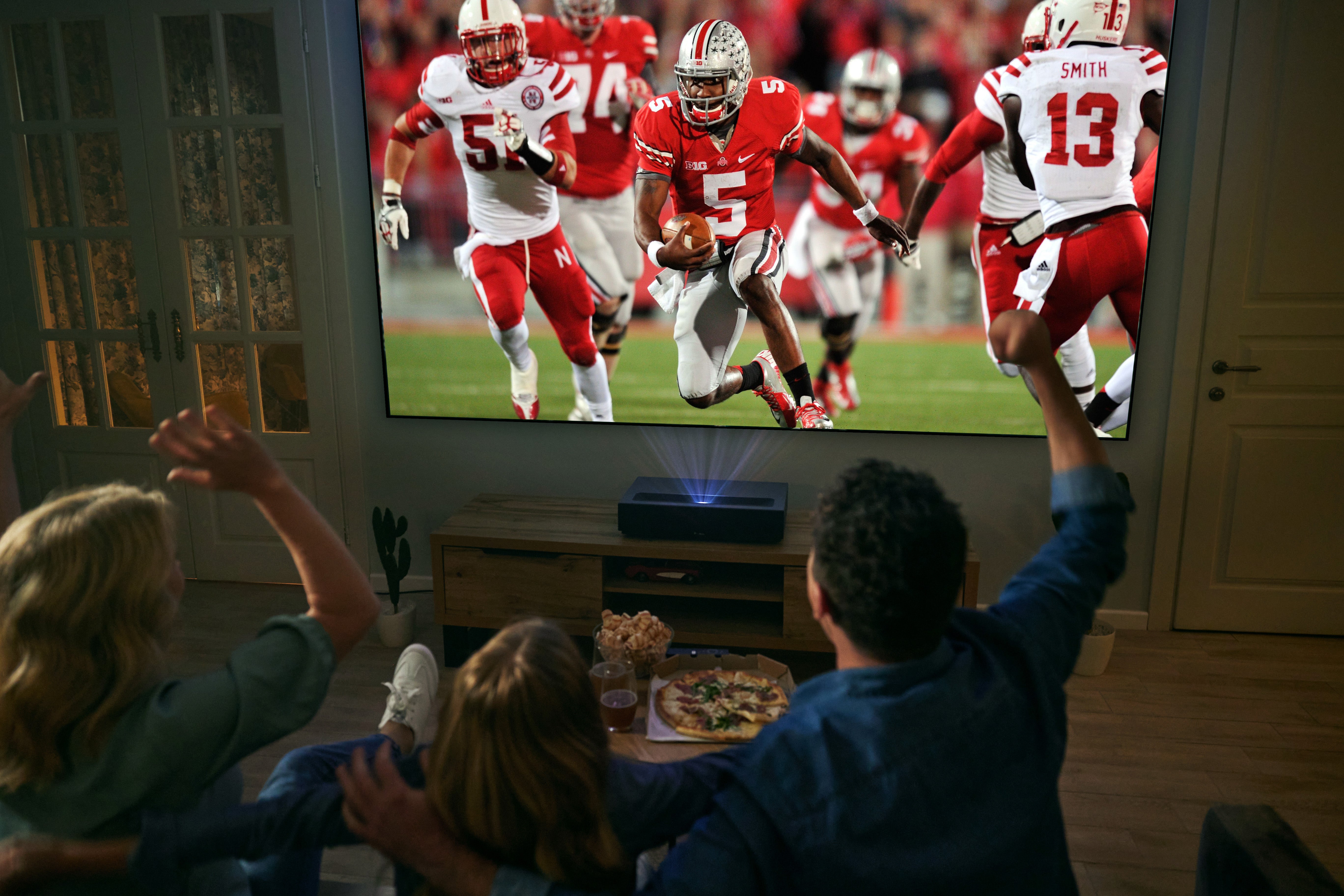
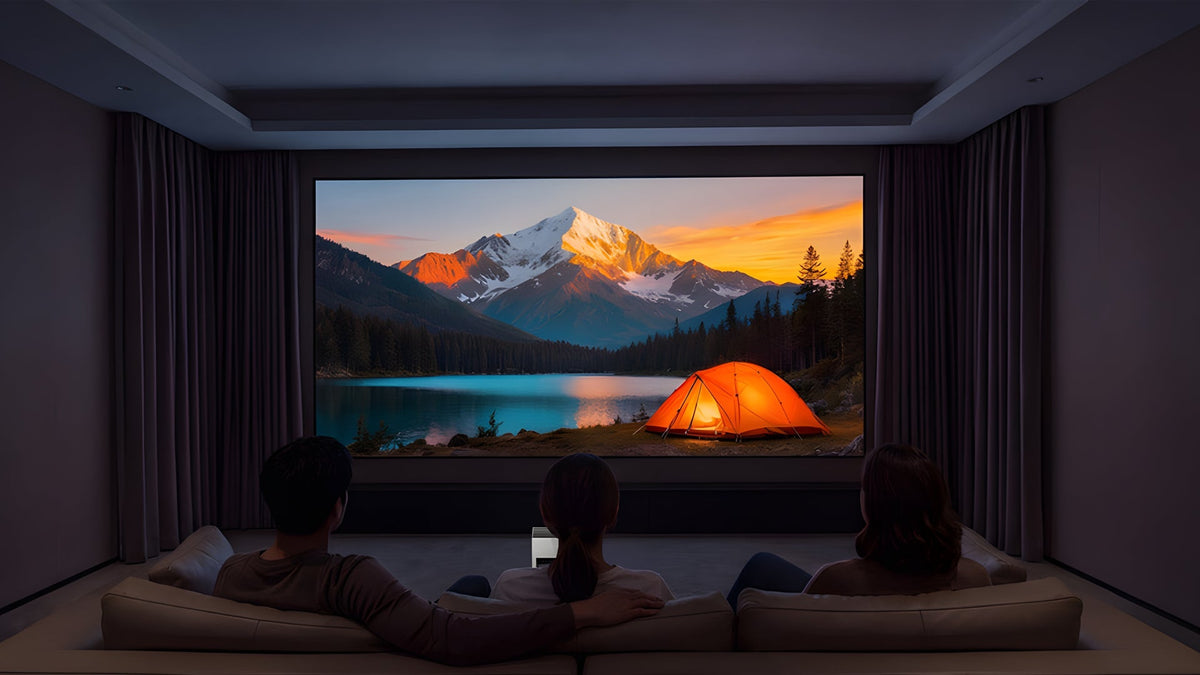
What Is a Matte White Projector Screen?
A matte white projection screen is a front-projection display surface characterized by its neutral white finish and diffuse reflection properties. Unlike glossy or high-gain surfaces that reflect light directionally (specular reflection), a matte white screen scatters projected light uniformly in all directions — a principle known as Lambertian reflection.
This diffuse reflection is what makes matte white the most versatile and widely used screen surface in both professional and residential applications. The surface typically offers a gain of 0.95 to 1.3, with the majority of reference-grade materials settling at unity gain (1.0).
How It Works: The Physics of Diffuse Reflection
When a projector beam hits a matte white surface, the light is scattered evenly across a wide angle — typically up to 170–180 degrees. This ensures that every seat in the room receives the same brightness and color accuracy, regardless of viewing angle. The neutral white base also guarantees color-neutral reproduction, meaning the screen does not introduce any color shift to the projected image.

The key trade-off? Matte white screens offer no ambient light rejection (ALR). In bright conditions, the screen reflects ambient light back to the viewer, which washes out contrast and reduces black levels. This is why matte white screens are the undisputed standard for light-controlled environments — dedicated home theaters, dark rooms, and professional calibration studios.
Core Application Scenarios: Where Matte White Excels
Primary Use Case: Light-Controlled Environments
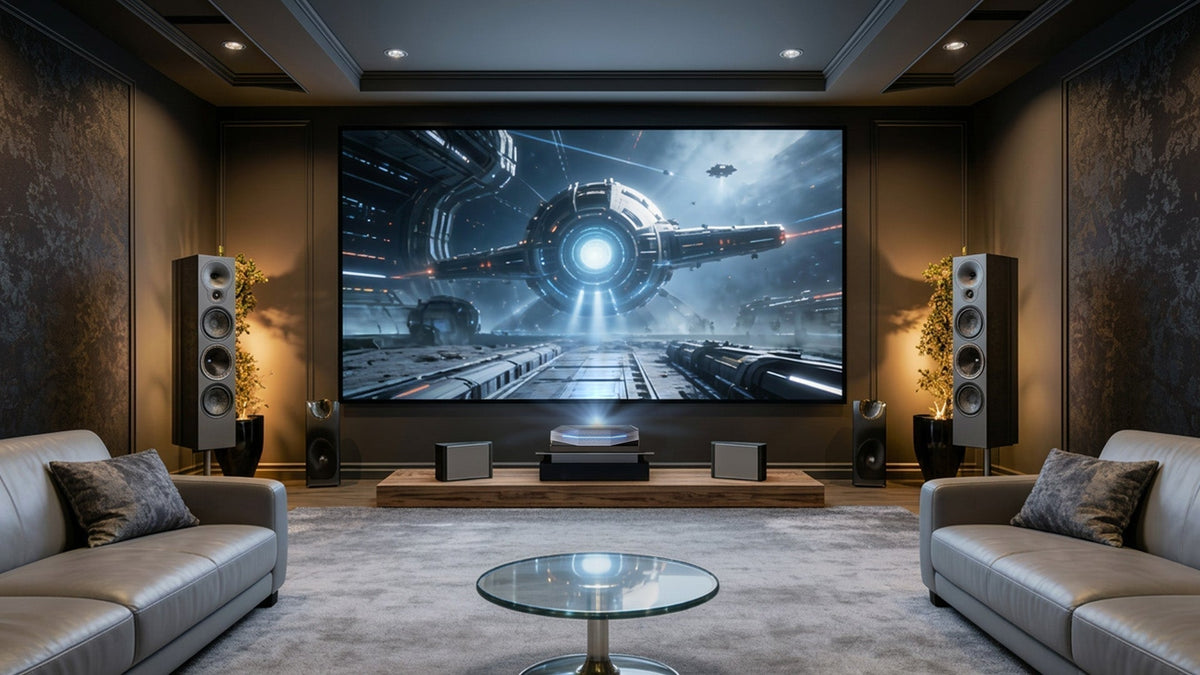
The matte white screen is purpose-built for spaces where you can control the lighting. In a dedicated home theater with no windows or blackout curtains, the screen delivers reference-grade color accuracy, perfect white field uniformity, and zero optical artifacts.

Why it works: With no ambient light to compete with, the projector's full dynamic range is preserved. Black levels remain deep, highlights stay punchy, and colors are rendered exactly as the content creator intended — without any optical filtering or gain manipulation altering the image.
Commercial & Professional Applications
Matte white screens dominate the commercial and education sectors. Draper's Matte White XT1000E surface, for example, is described as "the standard to which all other screen surfaces are compared" and is the "preferred viewing surface in educational and commercial markets". Common deployment scenarios include:
- Auditoriums and lecture halls
- Boardrooms and conference rooms
- Hospitals and healthcare facilities
- Hotels and event venues
- Churches and places of worship
Residential Home Theater
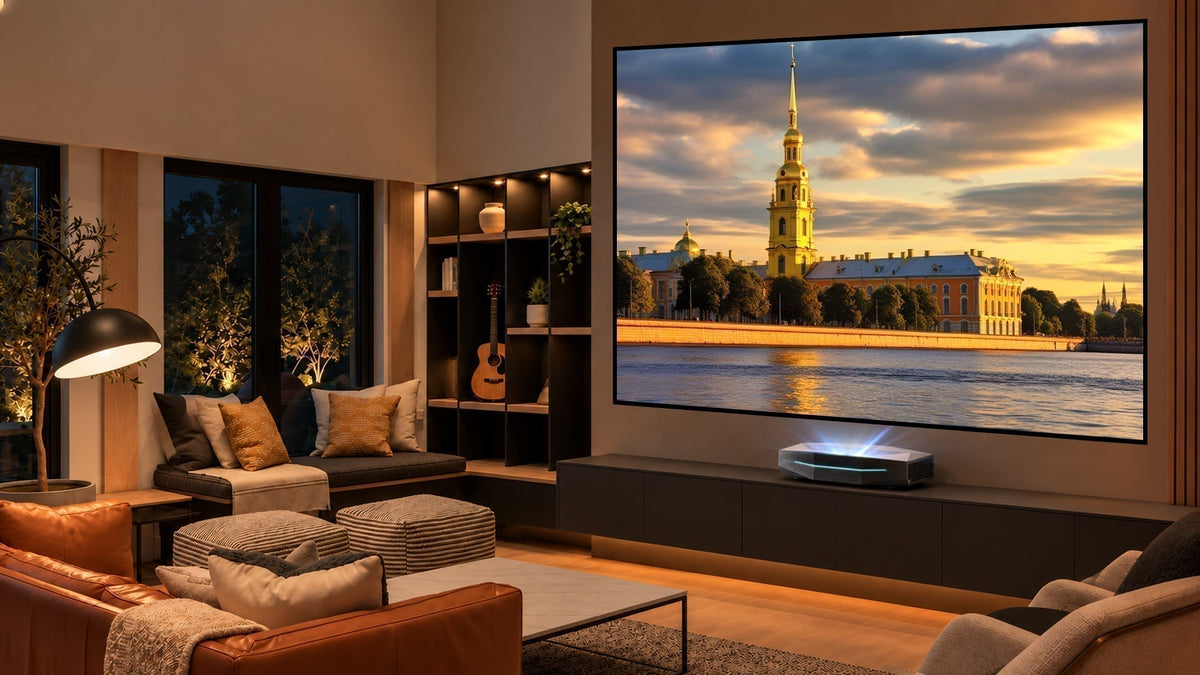
In residential settings, matte white screens are the go-to choice for dedicated home theater rooms where ambient light can be fully managed. They are also the preferred surface for color-critical applications such as video calibration, photography editing, and reference monitoring.

Market Penetration: The Numbers
While ALR screens have been gaining traction — with global home theater penetration reaching 22.3% in 2025 (up from 16.8% in 2021) — matte white remains the dominant screen type across all categories. In the commercial and education sectors, matte white's market share exceeds 80–90% due to its versatility, cost-effectiveness, and wide viewing angles.
Optimizing Matte White Performance in Bright Environments
While matte white screens are optimized for dark rooms, there are strategies to improve performance in spaces with some ambient light:

- Increase Projector Lumens — A brighter projector (3,000+ lumens) can overcome moderate ambient light.
- Use Blackout Curtains or Blinds — The most effective solution is simply controlling the light source.
- Position the Screen Away from Windows — Reduce direct light hitting the screen surface.
- Choose a Higher Gain Matte White — Some premium matte white materials offer 1.2–1.3 gain, delivering 30% more brightness than a standard white wall.
High-End Matte White Standards: What Defines Premium Quality?
Material Specifications
Premium matte white screen materials share several hard specifications:
| Specification | Premium Standard |
|---|---|
| Gain | 0.95–1.3 (unity gain 1.0 is the reference standard) |
| Viewing Angle | 170–180° |
| Color Accuracy | ISF-certified for accurate color reproduction |
| Surface | Tensioned, ripple-free, black-backed to eliminate light penetration |
| Resolution Support | 4K/8K UHD, HDR, Active 3D |
| Material | High-grade PVC or flexible composite |
Industry Certifications
High-end matte white screens typically carry one or more of these certifications:
- ISF (Imaging Science Foundation) Certified — Guarantees accurate color reproduction and image fidelity
- THX Certified — Meets rigorous performance standards for home theater
- GREENGUARD / GREENGUARD Gold Certified — Ensures low chemical emissions for safe indoor air quality
European & US Compliance Requirements
For screens sold in the European Union, compliance with RoHS (Restriction of Hazardous Substances) and REACH regulations is mandatory. In the United States, UL certification for fire safety and GREENGUARD for indoor air quality are common requirements.
Premium Matte White Screens: US Market Pricing & Specifications
Here's what leading US brands charge for premium matte white screens (120" class):
Fixed Frame Screens
| Brand | Model | Material | Gain | Price (USD) |
|---|---|---|---|---|
| Stewart Filmscreen | WallScreen 2.5 Studio | StudioTek 130 G4 Matte white, 1.3 gain | 1.3 | $2,599–$3,025 |
| Stewart Filmscreen | StudioTek 100 | Matte white, unity gain, ISF-certified | 1.0 | ~$2,500+ |
| Screen Innovations | 1 Series Gamma White | Matte white, 1.1 gain | 1.1 | $1,209 |
| Screen Innovations | Fixed 2" Pure White | Matte white, 1.3 gain | 1.3 | $1,989 |
| Elite Screens | Sable Frame 2 CineWhite UHD-B | ISF-certified matte white | 1.3 | $337 |
| Elite Screens | Aeon CineWhite UHD-B | ISF-certified matte white | 1.3 | $375–$1,574 |
Motorized Floor-Rising Screens
| Brand | Model | Material | Gain | Price (USD) |
|---|---|---|---|---|
| Stewart Filmscreen | Tensioned Electrol | Da-Mat matte white | 1.0 | $4,400–$12,500+ |
| Da-Lite | Tensioned Cosmopolitan Electrol | Da-Mat matte white | 1.0 | $2,597 |
| Elite Screens | VMAX2 (motorized) | MaxWhite matte white, GREENGUARD | 1.1 | ~$1,000–$1,500 |
| Screen Innovations | Zero-G Motorized | Pure White matte | 1.3 | ~$2,500+ |
NothingProjector Matte White: Premium Quality at an Accessible Price
NothingProjector offers two Matte White screen options that deliver premium performance without the premium price tag:
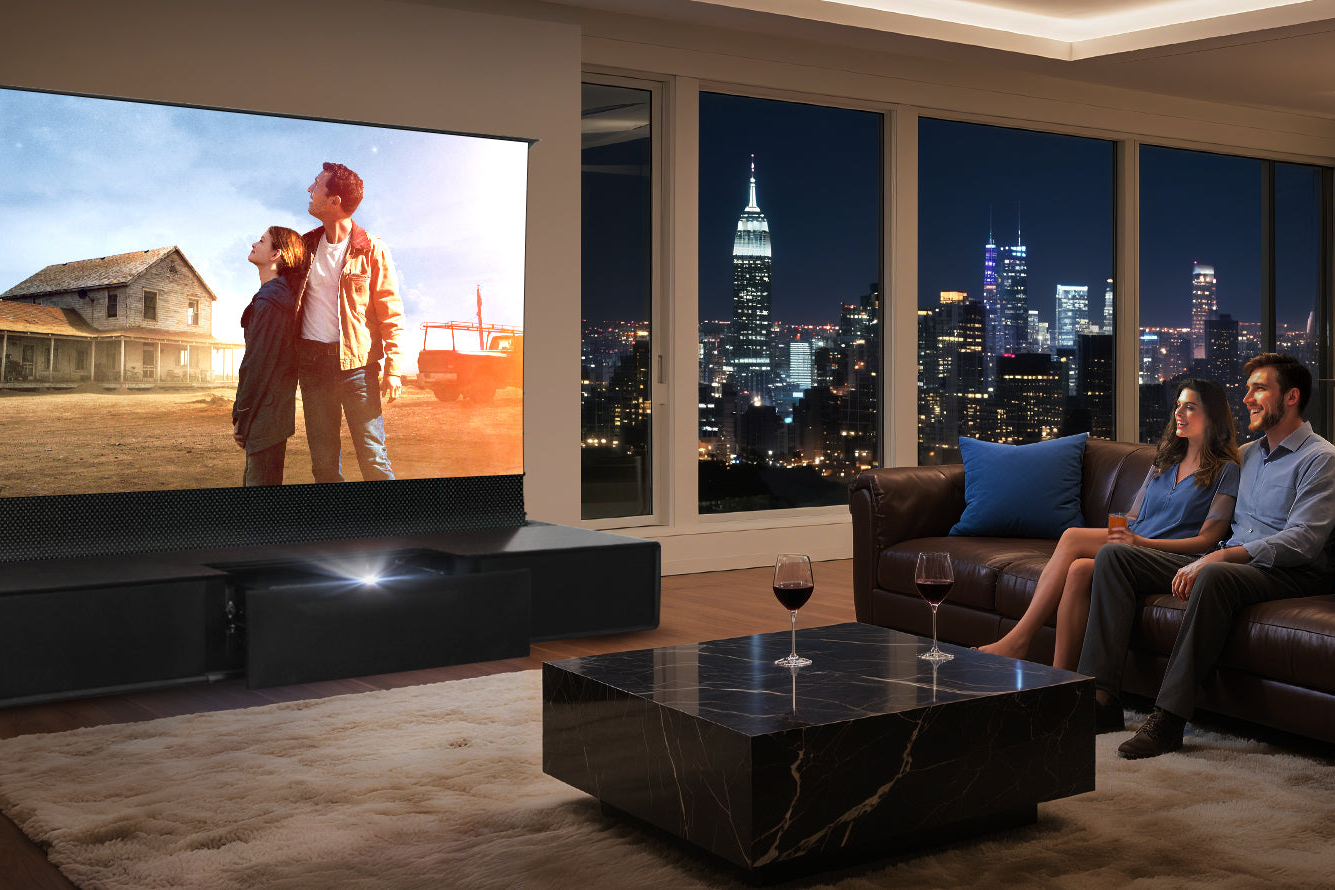
Option 1: Matte White Motorized Floor-Rising Screen
| Specification | Detail |
|---|---|
| Sizes | 100″ and 120″ (diagonal, 16:9) |
| Material | High-grade matte white PVC |
| Gain | 1.3 — 30% brighter than a standard white wall |
| Viewing Angle | 170° panoramic |
| Tensioning | Tab-tensioned side system achieving 97% flatness |
| Resolution Support | 4K/8K UHD, Active 3D |
| Motor | Silent DC tubular motor with Soft Start/Soft Stop |
| Compatibility | Long-throw, short-throw, and UST projectors |
| Price | €799 (100″) / €999 (120″) |

Option 2: Matte White Fixed Frame Screen
| Specification | Detail |
|---|---|
| Sizes | 100″ and 120″ (diagonal, 16:9) |
| Material | High-grade matte white PVC |
| Gain | 1.3 |
| Viewing Angle | 170° |
| Tensioning | Fixed frame with consistent tension |
| Resolution Support | 4K/8K UHD, Active 3D |
| Compatibility | Long-throw, short-throw, and UST projectors |
| Price | Available at nothingprojector.com |
Why NothingProjector Matte White Stands Out
- 1.3 Gain — Delivers noticeably brighter, punchier images than standard unity-gain screens
- Universal Compatibility — Works with long-throw, short-throw, and UST projectors — a versatility that specialized ALR screens cannot match
- Zero Installation Hassle — The motorized floor-rising model requires no drilling, no wall mounts, no permanent commitment
- Reference Color Neutrality — No optical filtering means pure, unaltered color reproduction
- Premium Build — Tab-tensioned flatness (97%), silent motor, and 8K-ready surface
What the Experts Are Saying
Mondoprojos.fr
"Les écrans blancs traditionnels conservent tout leur intérêt. Ils restent la solution offrant la meilleure neutralité colorimétrique, l'angle de vision le plus large et le coût de fabrication le plus faible."
("Traditional white screens retain all their value. They remain the solution offering the best color neutrality, the widest viewing angle, and the lowest production cost.")
The reviewer also praised the 97% flatness achieved through the tab-tensioning system and noted that the diffuse reflection surface helps reduce visual fatigue by avoiding the specular reflection found on glossier materials.
Frandroid
"Ce type de toile blanc mat reste la référence pour une restitution neutre et fidèle des couleurs."
("This type of matte white screen remains the reference for neutral and faithful color reproduction.")
The review highlighted the screen's versatility — compatible with long-throw, short-throw, and UST projectors — a key differentiator from more specialized ALR screens. The 170° viewing angle and 4K/8K support were also noted as significant advantages.
HomeTechnology Review
"A wall was never built to show you a picture, and no projector — however good — can fully make up for that. What NothingProjector has done here is build two genuinely excellent surfaces that turn on a projector's actual capability instead of muting it."
The review emphasized the 1.3 peak gain as "the number that matters most" — engineered to reflect 30% more brightness than a standard white wall. It also praised the 170° panoramic viewing angle that keeps brightness and color consistent "almost edge to edge", and the diffuse light reflection that scatters light for eye comfort rather than bouncing it directly back.
Matte White vs. ALR: Making the Right Choice
| Feature | Matte White Screen | ALR Screen |
|---|---|---|
| Ambient Light Rejection | None — reflects all light | Strong — rejects 65–95% of ambient light |
| Color Accuracy | Reference-grade, neutral | May introduce color shift |
| Viewing Angle | 170–180° | Often narrower (120–160°) |
| Brightness | High (1.0–1.3 gain) | Lower (0.6–0.8 gain typical) |
| Best Environment | Light-controlled rooms | Bright/mixed-light rooms |
| Price | More affordable | Premium pricing |
| Versatility | Works with all projector types | Often UST-specific |
Final Verdict: The Buyer's Decision
If you're building a dedicated home theater with controlled lighting — or if you simply want the most color-accurate, brightest, and widest-viewing screen possible — matte white is the professional's choice.
Here's why the NothingProjector Matte White screens deserve your attention:
- 1.3 Gain delivers 30% more brightness than a standard wall — your projector's lumens finally get to shine
- Universal compatibility means you're not locked into a specific projector type
- Zero-drill installation (motorized model) means no permanent commitment — perfect for renters or multi-purpose rooms
- Reference color neutrality ensures what you see is what the director intended
- Price — at €799 for the 100″ motorized model and €999 for the 120″, NothingProjector delivers premium matte white performance at a fraction of what premium US brands charge
Compare that to $2,500+ for a Stewart StudioTek 130 G4 fixed frame or $2,597+ for a Da-Lite motorized matte white, and the value proposition becomes clear.
The bottom line: If you want professional-grade image quality, reference color accuracy, and a screen that disappears when not in use — without spending $2,500+ — the NothingProjector Matte White screens are the smartest choice on the market today.