


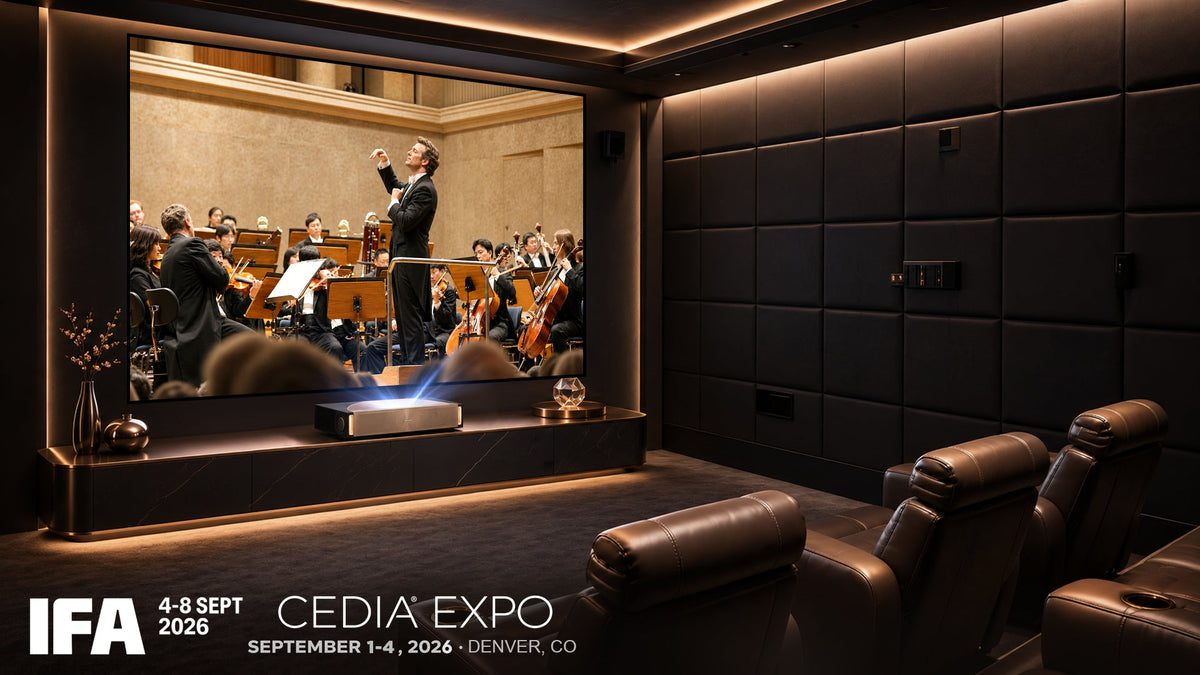
The 2026 trade show season has delivered a clear message: high-end home projection is no longer just about throwing a bright image onto a wall. It is about 4K at 120Hz, triple-laser RGB light engines, optical lens shift in ultra-short-throw form factors, and mechanical irises that dynamically sculpt contrast scene by scene. From Berlin's IFA to Denver's CEDIA Expo, the projector industry has quietly undergone its most significant technological leap in years.
This article breaks down what the major brands actually showed, how their new models compare, and what it all means for anyone building or upgrading a home theater in the next one to three years.
Epson, SIM2, and JVC: The Reference-Grade Players
Epson QL7000: 10,000 Lumens Changes the Conversation
Epson's CEDIA 2026 demonstration centered on the QL7000, a 4K 3LCD laser projector rated at an extraordinary 10,000 ISO lumens with IDMS color brightness. The projector uses a body-only design (lens sold separately) and supports screen sizes from 60 to 300 inches depending on the lens chosen.
What makes this significant is not just the brightness number. It is what that brightness enables: a 215-inch cinematic 2.0:1 display paired with Stewart Filmscreen's Director's Choice Generation 2 four-way masking screen, using the StudioTek 130 G4 acoustically transparent material. At this scale, high brightness stops being a luxury and becomes a necessity—without it, HDR highlights would be lost and the image would collapse under its own size.
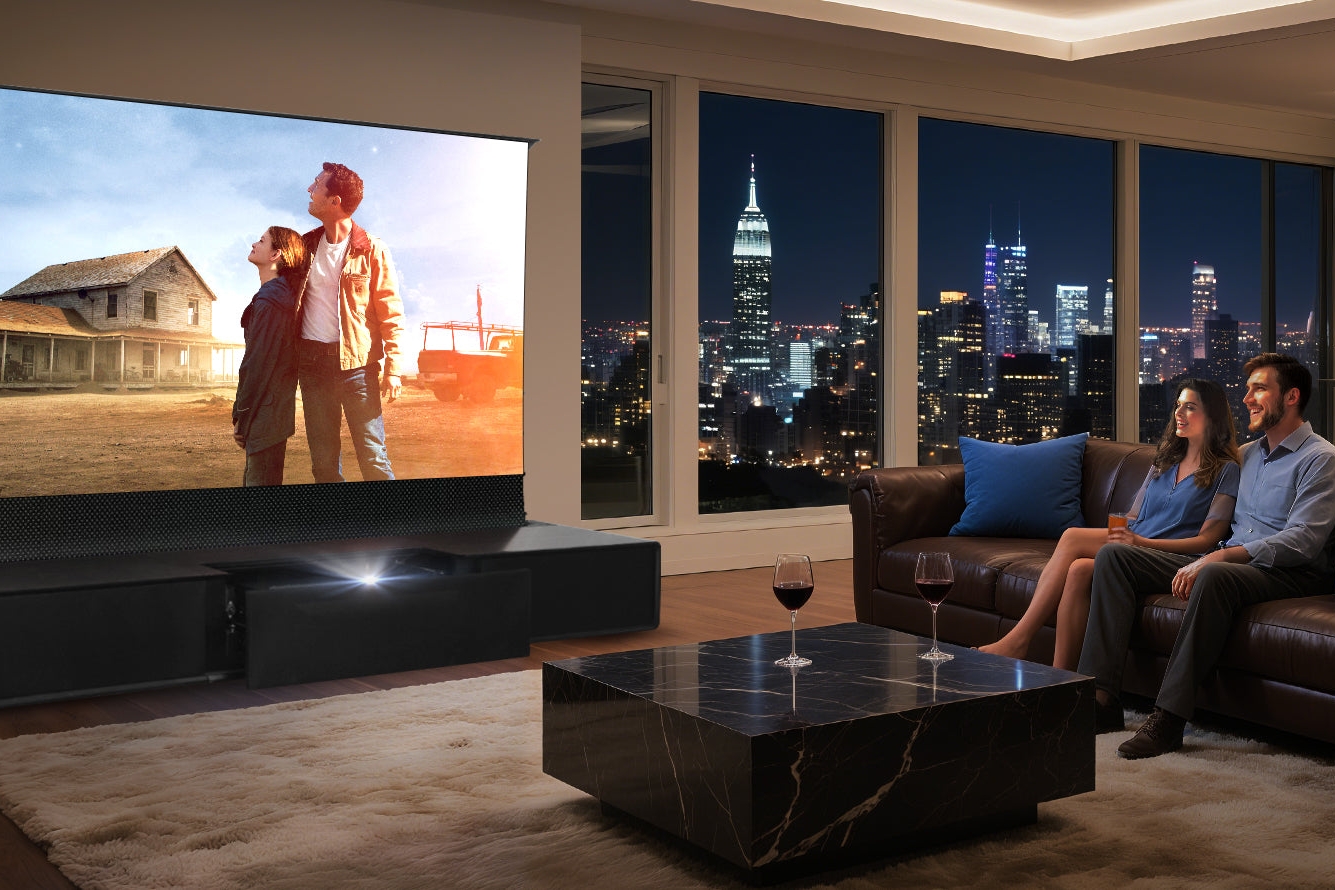
Epson also demonstrated the QL7000 in a more real-world configuration: ceiling-integrated with a short-throw lens, paired with a 135-inch Stewart Luxus G2 electric roller screen using GrayMatte 70 material. The projector disappears into the ceiling, leaving only the lens visible. This is the "invisible cinema" approach—projection that coexists with architecture rather than dominating it.
The Q-Series platform, which includes the QL7000 and companion models, represents Epson's strategy of offering a tiered brightness and performance ladder within a single product family. At CEDIA, a live comparison demonstrated how each Q-Series model can be matched to specific room conditions and screen sizes.
Key takeaway: Epson is not chasing the gaming refresh-rate arms race. It is positioning the QL7000 as a reference-grade cinematic tool for dedicated theaters where light output and color volume matter more than 120Hz.
SIM2 UltraNero 4S: The Dual-Projector HDR Philosophy
SIM2 took a fundamentally different approach at CEDIA. The Italian manufacturer's UltraNero 4S DUO is a dual-projector system where two UltraNero 4S units, each with customized lenses and optical paths, work in tandem. A single unit delivers 7,000 lumens with 95% P3 coverage; the DUO configuration is rated at up to 12,000 lumens.
The engineering behind the DUO is worth understanding. Each projector runs a separately calibrated EOTF curve—one optimized for low-luminance detail, the other for high-luminance highlights. The system combines their outputs to achieve simultaneously deep blacks and bright, non-clipping highlights, a feat that single-projector HDR often struggles with.
SIM2 uses a ceramic color wheel with double the filter segments of typical designs, allowing it to run at half speed and dramatically reduce acoustic noise. The optical system employs a telecentric all-glass high-resolution lens with ceramic components for thermal stability and dispersion suppression. The result is a projector that stays sharp and color-accurate across 150- to 260-inch screens and long throw distances, where lesser optics would degrade edge sharpness and introduce chromatic aberration.
Key takeaway: SIM2 is not competing on refresh rate or smart features. The UltraNero 4S DUO is a statement product for dedicated, light-controlled theaters where uncompromising HDR performance justifies a dual-projector investment.
JVC DLA-NZ900 and DLA-NZ800: 8K Cinema and 4K/120p Gaming, Separated
JVC's CEDIA booth featured two distinct demonstrations, and the split tells you everything about the company's strategy.
The DLA-NZ900 anchored the cinematic 8K demonstration, using JVC's proprietary 8K/e-shiftX technology to deliver over 33 million pixels on a 165-inch Stewart Filmscreen StreamPro screen. Its BLU-Escent laser light source achieves a 150,000:1 native contrast ratio—a figure that remains unmatched in the consumer projection space.
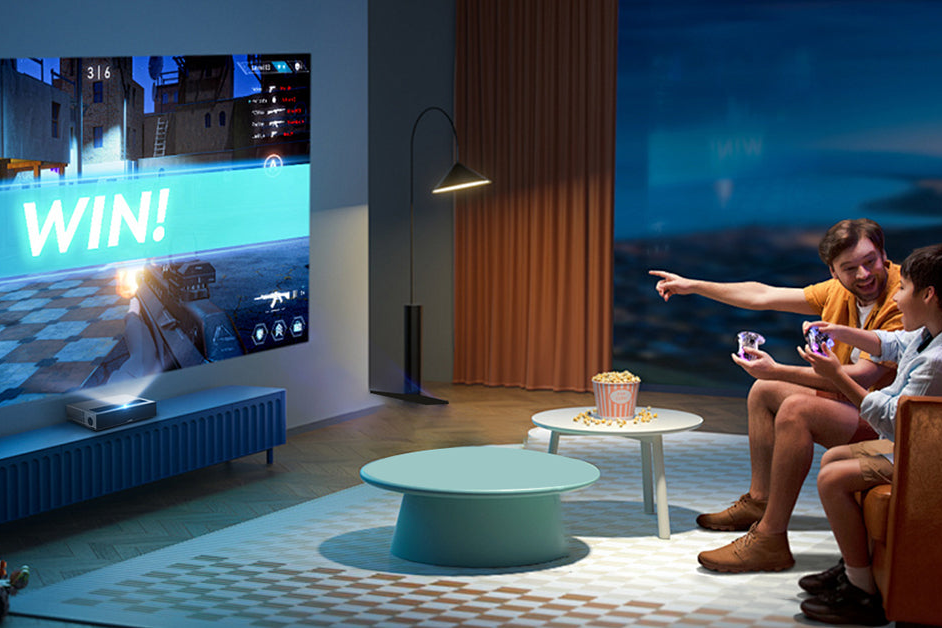
The DLA-NZ800 handled the gaming demonstration, with native 4K/120p input, Auto Low Latency Mode (ALLM), and 100,000:1 native contrast on a 100-inch Screen Innovations Slate screen. JVC even ran a live soccer gaming demo to let visitors feel the responsiveness firsthand.
The critical detail here is that JVC is not trying to make one projector excel at both cinema and gaming simultaneously. It is positioning the NZ900 for cinematic immersion and the NZ800 for responsive large-screen gaming—two different products for two different buyers.
Key takeaway: JVC's D-ILA technology remains the gold standard for native contrast in home theater projection. Its 8K/e-shiftX approach delivers perceptible resolution gains without the cost and complexity of a true 8K panel.
IFA 2026: The UST Triple-Laser Revolution Goes 4K/120Hz
While CEDIA showcased reference-grade long-throw and dedicated theater solutions, IFA 2026 in Berlin was where the ultra-short-throw (UST) category made its biggest leap yet. The headline story: 4K at 120Hz is now available in UST form factors, and multiple brands are shipping it in 2026.

Hisense L9Q Pro and PX4 Pro
Hisense's L9Q Pro is the new flagship in its Laser TV lineup. Brightness rises to 5,500 ANSI lumens (up from 5,000 on the previous L9Q), with a 0.18:1 throw ratio and support for 80- to 200-inch screens. The RGB triple-color laser engine delivers 118% BT.2020 coverage with ΔE≈0.8, and a new 7-level adjustable iris achieves 6,000:1 native contrast with up to 60,000:1 viewing contrast.
The standout feature is ±5% lossless vertical lens shift—a first for a UST projector. This allows precise image alignment via remote without digital keystone correction, which would otherwise degrade resolution. The audio system is a Devialet co-branded 6.2.2-channel 116W array with 10 drivers, including dual subwoofers and up-firing channels.
The PX4 Pro, meanwhile, targets gamers more directly. It offers 3,500 ANSI lumens, a 0.20:1 throw ratio, and the distinction of being the first UST projector with AMD FreeSync Premium certification. It supports 2K at 240Hz and 4K at 120Hz input, with a CineBlack Pro mechanical iris for deep blacks. At €3,499, it undercuts the L9Q Pro significantly.
AWOL Vision LuxVision
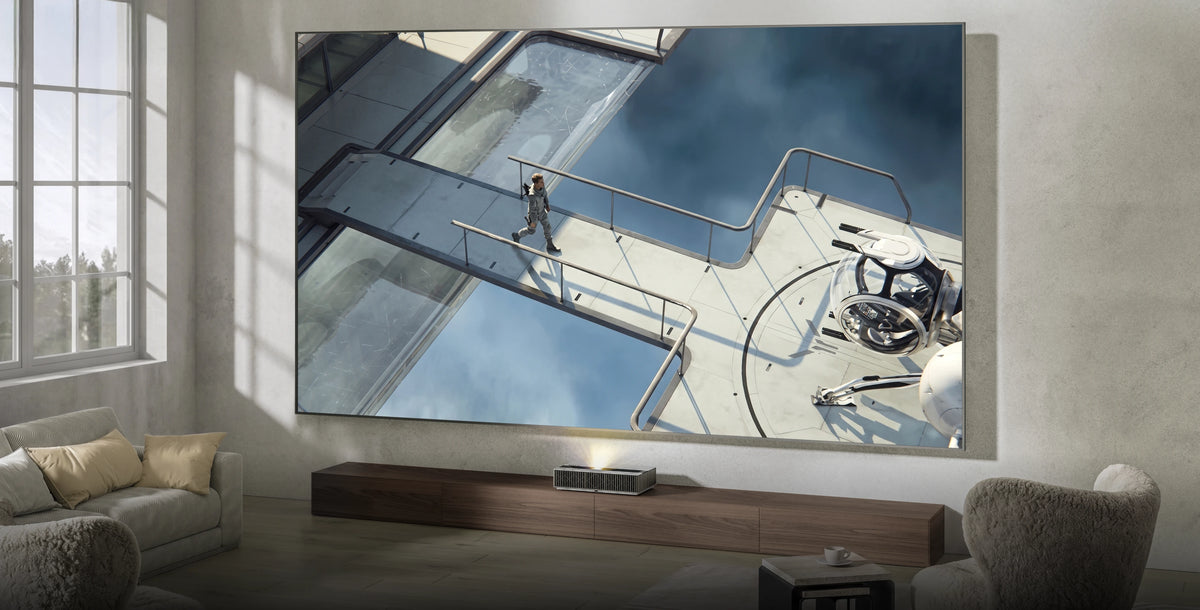
AWOL Vision's LuxVision is being positioned as the world's first 4K 120Hz UST projector with optical lens shift. The triple-laser RGB engine delivers 6,000 ISO lumens with 110% Rec. 2020 coverage and a 7-level dynamic IRIS. Its 0.18:1 throw ratio produces a 120-inch image from just 7.5 inches away, with support up to 200 inches.
For gaming, AWOL claims 1ms input lag, with VRR, ALLM, and Dolby Vision Gaming support. Three HDMI 2.1 ports and a DisplayPort provide connectivity for multiple sources. Cinematic features include Dolby Vision, IMAX Enhanced, Filmmaker Mode, and 3D.
The LuxVision launches around October 2026 at $5,999/€5,999.
XGIMI Aura 3 Max

XGIMI's Aura 3 Max brings 5,700 ISO lumens and a native contrast ratio of 8,000:1—a dramatic improvement over the Aura 2's 2,300 ISO lumens. The X-Vision Bionic optical engine combines a 0.47-inch DLP DMD chip with a triple RGB laser light source covering 110% BT.2020.
The dual mechanical iris system is a world first for a UST projector, with two irises working together to physically control light output and dynamically adjust frame by frame. Processing is handled by two DLPC 8545 controllers operating in parallel, enabling true 4K at 120Hz—not 60Hz 4K or 120Hz 1080p, as was previously the ceiling for UST models.
Gaming features include Dolby Vision Gaming, VRR, ALLM, and a claimed 1ms response time. MEMC works at 4K/120Hz for sports content. The Aura 3 Max is priced at $2,399 during its Kickstarter campaign, with retail expected around $5,000.
JMGO Iris Ultra Max
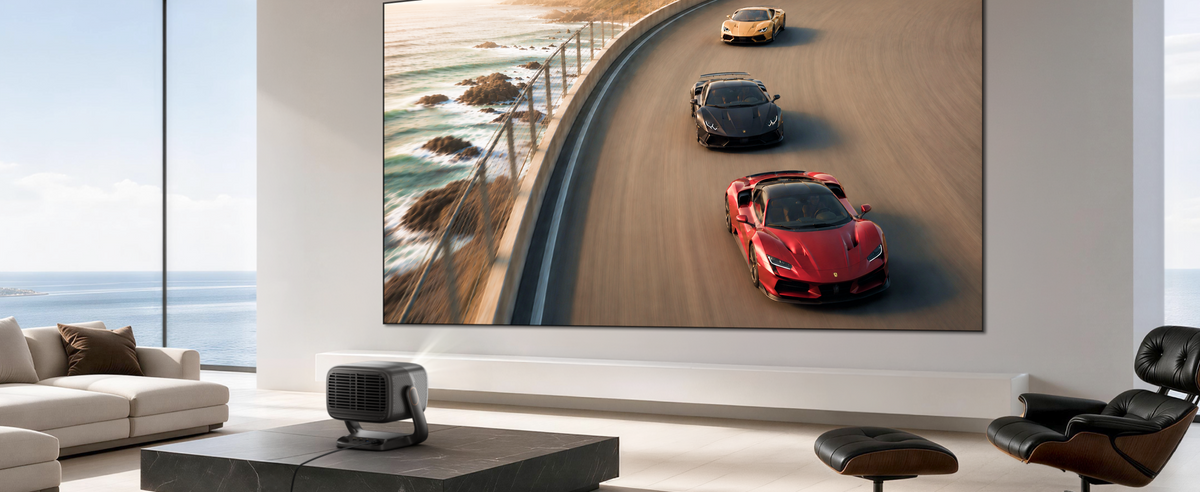
JMGO's Iris line introduces a new light engine with 6,500 lumens on the Ultra Max and 4,500 lumens on the standard Ultra. Both offer 4K at 120Hz, a 0.9-1.7:1 optical zoom, horizontal and vertical image shift (separate from the motorized gimbal), and a dual iris system for dynamic contrast control.
CNET's hands-on noted that while 120Hz at 4K is "an interesting technical feat," DLP has never had a significant motion blur issue, so the improvement is less dramatic than it would be on an LCD-based system. That is an honest assessment: for DLP, the refresh rate bump is more about compatibility with 120Hz sources than about fixing a visible flaw.
BenQ W4200 and TK715i
BenQ's first triple-laser RGB projectors, the W4200 and TK715i, use Nichia's Qualas 42 engine with a 0.47-inch DLP DMD chip, delivering 3,200 ANSI lumens and 99% DCI-P3 coverage. The W4200 is positioned for home theater with 1.6x optical zoom, ±50% vertical and ±20% horizontal lens shift, and a native contrast ratio of up to 3,000:1 with a physical iris. It supports Dolby Vision and features HDR-Pro 2.0 processing with AI Contrast.
BenQ has also developed its own anti-speckle system to reduce the speckling that can occur with RGB laser sources, and a process to minimize rainbow effect perception.
Cross-Comparison: What Each Brand Is Actually Betting On
| Brand | Flagship Model | Light Source | Brightness | Refresh Rate | Key Differentiator | Target Buyer |
|---|---|---|---|---|---|---|
| Epson | QL7000 | 3LCD Laser | 10,000 ISO lm | 60Hz (4K) | Raw brightness at scale | Dedicated theater, large screens |
| SIM2 | UltraNero 4S DUO | DLP Laser + Ceramic | Up to 12,000 lm (DUO) | 60Hz (4K) | Dual-projector HDR | Ultra-high-end cinema |
| JVC | DLA-NZ900 / NZ800 | D-ILA BLU-Escent | N/A | 4K/120p (NZ800) | Native contrast (150,000:1) | Cinema purists / gamers |
| Hisense | L9Q Pro | RGB Triple Laser | 5,500 ANSI lm | 4K/120Hz | Lens shift + Devialet audio | Living room Laser TV |
| AWOL | LuxVision | RGB Triple Laser | 6,000 ISO lm | 4K/120Hz | Optical shift + 1ms lag | Hybrid gaming/cinema |
| XGIMI | Aura 3 Max | RGB Triple Laser | 5,700 ISO lm | 4K/120Hz | Dual iris + 8,000:1 contrast | Value-focused UST |
| JMGO | Iris Ultra Max | Triple Laser | 6,500 lm | 4K/120Hz | Motorized gimbal + zoom | Flexible placement |
| BenQ | W4200 | Triple Laser (Nichia) | 3,200 ANSI lm | 4K/60Hz | Dolby Vision + calibration | Home theater accuracy |
The table reveals a clear strategic split. Epson, SIM2, and JVC are competing on image fidelity dimensions that do not involve refresh rate: brightness at scale, native contrast, and HDR precision. Hisense, AWOL, XGIMI, JMGO, and BenQ are competing on the UST and hybrid-use front, where 4K/120Hz, optical shift, and smart features drive purchasing decisions.
What This Means for the Next 1–3 Years
Epson: Defending the Dedicated Theater
Epson's Q-Series strategy is about offering a brightness ladder within a single platform. The QL7000's 10,000 lumens is not aimed at living rooms with windows—it is aimed at dedicated theaters where the projector is the only light source and screen sizes exceed 150 inches. By avoiding the 120Hz race, Epson keeps costs focused on light engine quality and 3LCD color brightness, which remains its core advantage.
SIM2: The Boutique Reference
SIM2 is not trying to sell volume. The UltraNero 4S DUO is a €35,000+ product for a specific customer: someone who wants the absolute best HDR performance in a light-controlled room and is willing to accept a dual-projector installation. This is a brand-building exercise as much as a product launch.
JVC: The Contrast King Doubles Down
JVC's split demonstration—NZ900 for cinema, NZ800 for gaming—is a recognition that no single projector can be perfect at both. By offering two products with distinct strengths, JVC captures both the cinema purist and the gamer who wants a large-screen experience. Its 150,000:1 native contrast remains the benchmark that competitors have not matched.
Hisense, AWOL, XGIMI: The UST 4K/120Hz Land Grab
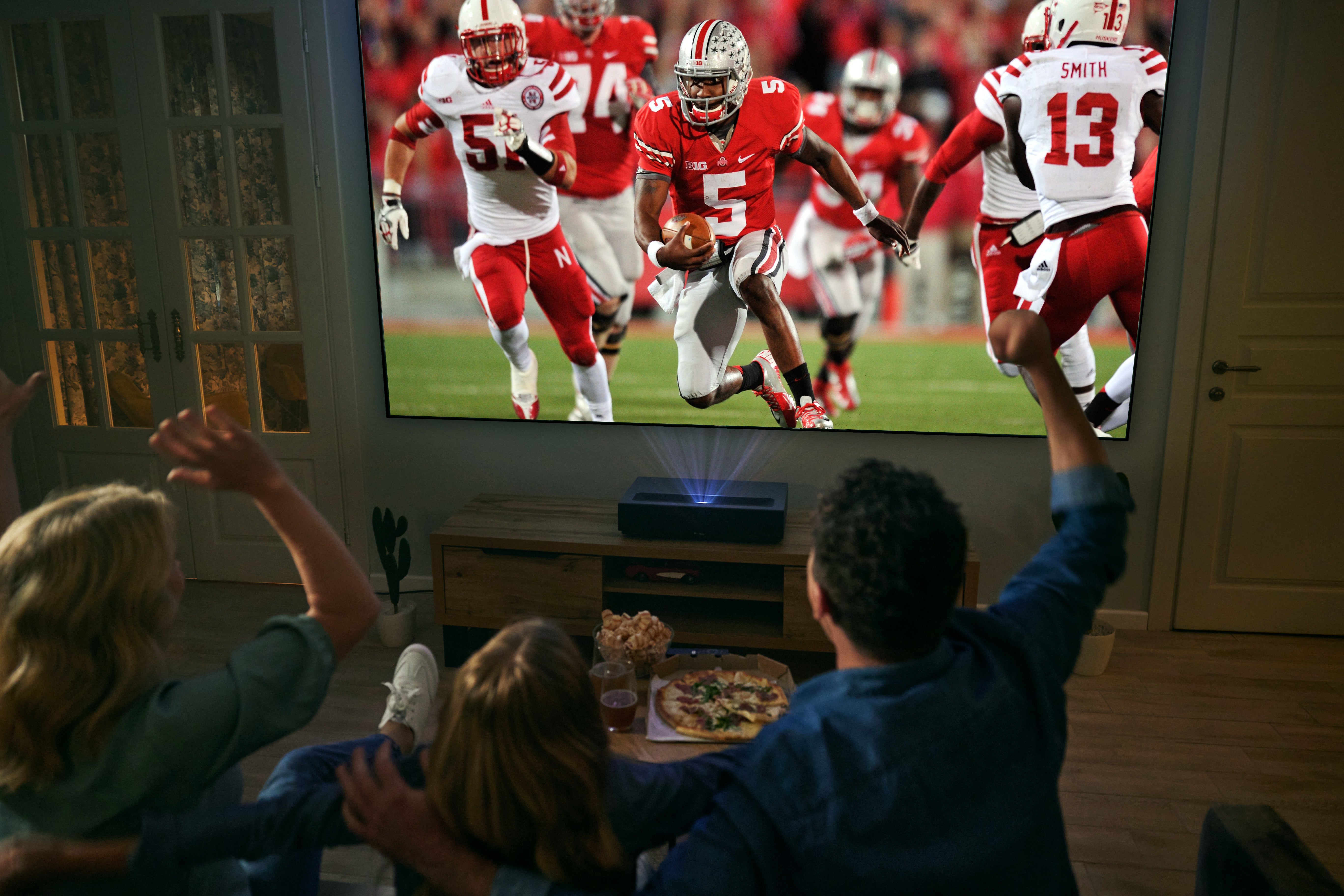
These three brands are fighting for the same customer: someone who wants a 100- to 150-inch image in a living room, plays console games, watches sports, and does not want to mount a projector on the ceiling. The differentiators are becoming narrower: brightness ranges from 5,500 to 6,000 lumens, all use triple-laser RGB engines, and all support 4K/120Hz. The battle will be won on price, software ecosystem (Google TV vs. Vidaa), audio quality (Devialet vs. Harman Kardon), and availability.
AWOL's optical lens shift is a genuine differentiator—it solves a real pain point for UST installation. Hisense's vertical lens shift and FreeSync Premium certification give it credibility with gamers. XGIMI's dual iris and 8,000:1 native contrast claim, if validated in independent testing, would set a new standard for UST black levels.
JMGO and BenQ: Niche Plays
JMGO's motorized gimbal and optical zoom target users who want flexibility in placement without sacrificing image geometry. BenQ's focus on factory calibration, Dolby Vision, and anti-speckle technology appeals to buyers who prioritize color accuracy and long-term reliability over spec-sheet brightness.
Projector vs. TV: Where Each Still Wins
The projector-versus-TV debate has shifted in recent years, but the fundamental trade-offs remain.

Where projectors win:
- Screen size per dollar. A 100-inch 4K TV remains prohibitively expensive, while a projector plus screen can deliver 120 inches or more for a fraction of the cost. As one comparison puts it, projectors "can easily display images 120 inches or bigger, a size that puts TVs into a wholly different price category".
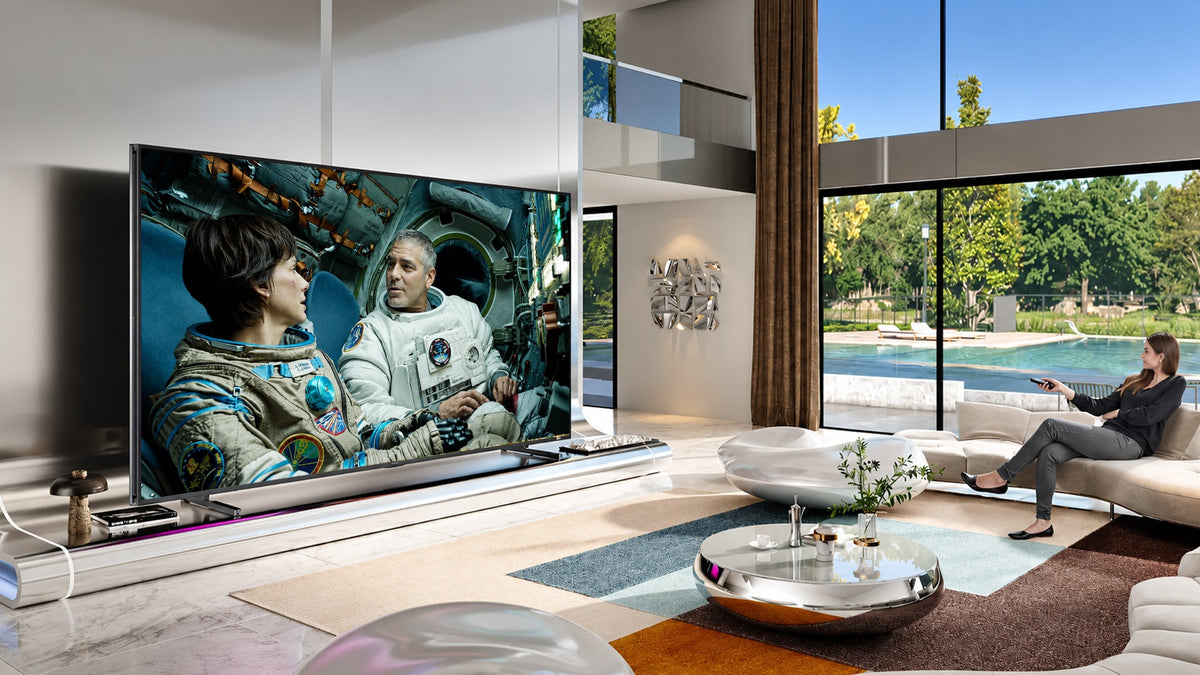
- Cinematic presence. The reflected-light nature of projection produces a softer, less fatiguing image that many viewers find more film-like. It is the difference between looking at a screen and looking at a wall that happens to be showing a movie.
- Discreet installation. A ceiling-mounted projector and retractable screen can disappear completely when not in use. A 100-inch TV, by contrast, is a permanent black rectangle on your wall.
Where TVs win:
- Bright-room performance. Even the brightest projector struggles against direct sunlight or strong ambient light. A high-end LCD or OLED TV maintains contrast and color volume in conditions that would wash out any projection image.
- Black level and contrast. OLED's per-pixel dimming produces absolute blacks that no projector can match. Even the best D-ILA and DLP projectors rely on room treatment and screen choice to approach OLED-level contrast.
- Simplicity. A TV is plug-and-play. A projector requires screen selection, mounting, calibration, and light control. For casual viewers, this friction matters.
The 2026 reality: Projectors have closed the gap on brightness and color volume significantly. A 6,000-lumen UST projector with a triple-laser engine and an ALR screen can now deliver a compelling image in a living room with some ambient light. But for critical viewing in uncontrolled lighting, a premium TV still has the edge.

The Screen Matters More Than Any Spec
A projector is only half of the image equation. The screen determines contrast, color fidelity, and ambient light rejection. Pairing a high-end projector with the wrong screen is like putting budget tires on a sports car.
For Standard-Throw and Long-Throw Projectors
The NothingProjector Matte White Fixed Frame Screen (100" and 120") is a reference-grade matte white option for dedicated dark-room theaters. Its PVC surface with 1.3 gain and 170-degree viewing angle preserves neutral color without the selective optical treatment that can introduce color shift. HDR10+ support and 4K/8K compatibility keep it future-proof for the latest source material.
For rooms where a permanent screen is not practical, the NothingProjector Matte White Motorized Floor Rising Screen offers the same matte white material in a retractable form factor. The motorized mechanism deploys and retracts at the touch of a button, making it suitable for multi-use spaces where the screen must disappear when not in use.
For Ultra-Short-Throw Projectors
UST projectors require a screen specifically engineered for the steep projection angle. A standard matte white screen will produce hotspotting and uneven brightness with a UST light path.
The NothingProjector Black Series Fixed Frame UST ALR Screen uses a multi-layer CBSP structure that rejects up to 95% of ambient light, making it viable even in rooms with overhead lighting. Its 170-degree viewing angle and 4K/8K compatibility keep the image sharp and uniform across the seating area.
For UST owners who want retractability, the NothingProjector Motorized Floor Rising ALR Screen combines the same 95% ALR premium HBST PET material with a floor-rising mechanism. It is compatible with popular UST models including the Hisense L9H, AWOL Vision LTV-3500, and XGIMI Aura, and includes an acoustically transparent bottom border for center-channel speaker placement.

Matching screen gain to projector brightness is critical. A high-gain screen boosts perceived brightness but can introduce hotspotting and narrower viewing angles. A lower-gain ALR screen sacrifices some brightness for better ambient light rejection and more uniform color. For UST setups in living rooms, ALR is almost always the correct choice.
The Bottom Line
IFA and CEDIA 2026 revealed an industry that has bifurcated. On one side, Epson, SIM2, and JVC are pushing the limits of brightness, native contrast, and HDR precision for dedicated theaters where every photon is controlled. On the other, Hisense, AWOL, XGIMI, JMGO, and BenQ are democratizing 4K/120Hz and triple-laser RGB in UST form factors that fit into living rooms without renovation.
For buyers, the decision comes down to use case. If you have a light-controlled room and prioritize cinematic fidelity above all else, the reference-grade options from Epson and JVC are the benchmarks. If you want a 120-inch image in your living room, play console games, and watch sports, the new wave of 4K/120Hz UST projectors offers more performance per dollar than ever before.
Whatever you choose, do not treat the screen as an afterthought. The right screen can elevate a good projector to excellent; the wrong one can make an excellent projector look mediocre. Match your screen to your projector type, room conditions, and viewing habits—and the image will reward you.